
Key Takeaways
- U.S. electricity bills increased by $110 per household from 2024 to 2025
- New Jersey saw a 16% increase, more than double the national average
- PJM Interconnection grid pricing and data center demands are driving cost spikes
- Energy inefficiency in HVAC systems can further increase utility bills
- Businesses can reduce costs through energy assessments and upgrades
JEC Energy Report: Electricity Costs Are Rising Nationwide
The Joint Economic Committee (JEC) Minority Report shows a nationwide increase in electricity costs. On average, annual electricity bills rose by $100 per household from 2024 to 2025.
However, some states experienced significantly higher increases. New Jersey, Pennsylvania, Maryland, and Washington, D.C. reported the largest spikes in energy costs.
Read the full State-by-State Energy Report Here
New Jersey Utility Costs Outpacing the National Average
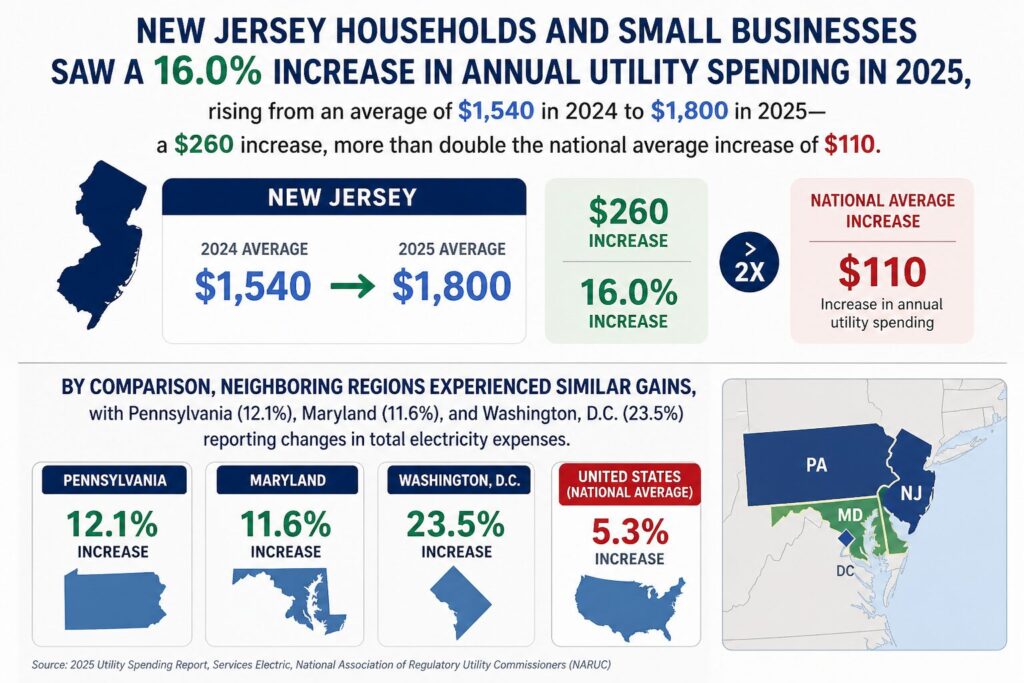
New Jersey households and small businesses saw a 16.0% increase in annual utility spending in 2025. Costs rose from $1,540 in 2024 to $1,800 in 2025, resulting in a $260 increase.
This increase is more than double the national average. By comparison:
- Pennsylvania: 12.1% increase
- Maryland: 11.6% increase
- Washington, D.C.: 23.5% increase
These numbers highlight the growing burden on New Jersey energy customers
Why Energy Costs Are Increasing: The PJM Grid Explained
Many assume energy habits drive these cost increases. However, the primary factor is the regional power grid.
PJM is a Regional Transmission Organization (RTO) that manages the electric grid across multiple states in the Eastern Interconnection. Because these states share the same grid, price spikes in one region can impact others.
As a result, energy costs across PJM-connected states often rise together.
Data Centers and Energy Demand Are Driving Price Spikes
Energy demand has increased rapidly in recent years. Two major factors are driving this trend:
- Continued reliance on fossil fuels
- Growth of data centers and artificial intelligence workloads
PJM has experienced capacity rate increases of over 800% due to these pressures. Data centers require large amounts of electricity, making them a major contributor to rising demand.
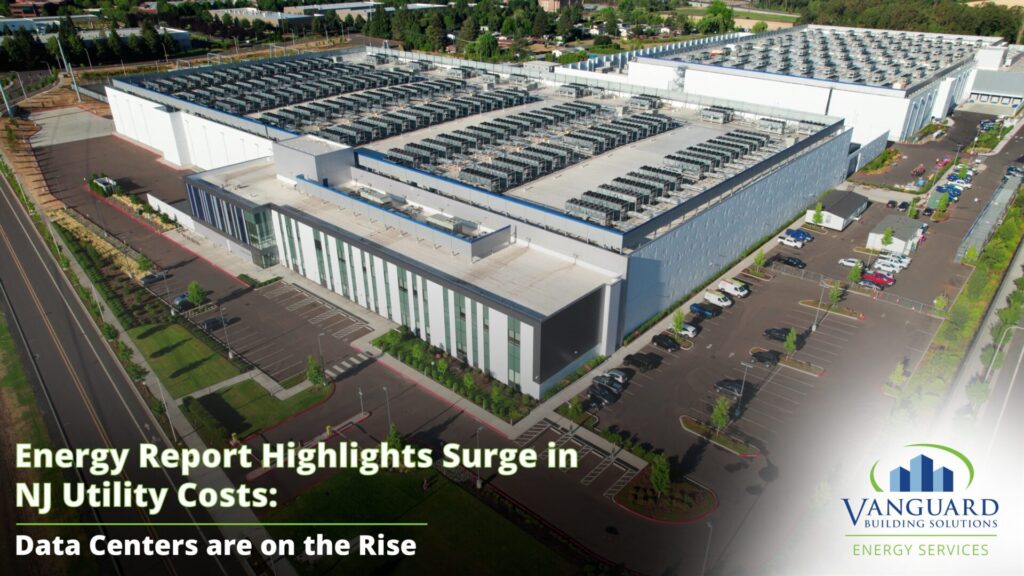
A data center is a physical facility that houses computing infrastructure, storage systems, and networking equipment to store, process, and manage data for organizations and cloud services.
As AI adoption grows, this demand data centers is expected to increase even further.
New Jersey Response: Policy Changes to Control Energy Costs
To address rising costs, New Jersey has taken action.
State leaders declared a state of emergency to accelerate in-state energy production. In addition, officials implemented a temporary freeze on utility rate increases.
The New Jersey General Assembly also passed legislation requiring large data centers to fund their own grid upgrades. This policy ensures that utility customers are not responsible for infrastructure costs tied to high-demand facilities.
Hidden Cost Driver: Inefficient HVAC Systems
While rising utility rates play a major role, another factor often goes unnoticed: HVAC efficiency.
Older or poorly maintained heating and cooling systems can significantly increase energy consumption. For businesses and facilities, this can turn seasonal spikes into long-term cost problems.
Even small inefficiencies can lead to higher monthly bills.
How Businesses Can Reduce Energy Costs
Rising energy cots make efficienct more important than ever.
Businesses can take action by:
- Upgrading outdated HVAC systems
- Improving system maintenance
- Identifying energy waste
- Investing in energy-efficient equipment
These steps can reduce utility costs and improve long-term performance.
Get a No-Cost Energy Assessment
Don’t let rising energy costs impact your bottom line.
Contact VBS today to schedule a no-cost comprehensive energy assessment. Our team will identify opportunities to reduce energy usage and lower your utility bills.
Stop paying for energy you don’t need!
FAQ: Rising Energy Costs & NJ Utility Bills
Why are electricity costs increasing in New Jersey?
Electricity costs are rising due to PJM grid pricing, increased demand from data centers, and limited energy supply.
What is PJM and how does it affect energy prices?
PJM is a regional grid operator. It manages electricity distribution across multiple states. Price changes in one area can impact all connected regions.
How do data centers affect energy costs?
Data centers require large amounts of electricity. As demand increases, energy prices rise to meet capacity needs.