

Key Takeaways
- Prepare for Seasonal Demands: Plan for increased heating and lighting needs as temperatures drop.
- Maintain HVAC Systems: Schedule routine maintenance and use smart thermostats to improve efficiency.
- Improve Insulation: Seal air leaks and maintain weatherstripping to prevent heat loss.
- Optimize Lighting: Upgrade to LEDs, maximize natural light, and power down unused equipment.
- Monitor Energy Usage: Review utility bills to identify energy waste and savings opportunities.
- Schedule an Energy Assessment: Identify inefficiencies and explore cost-saving building upgrades.t.
Preparing Your Facility for the Winter Season
As the seasons transition from fall to winter, commercial buildings face new challenges in maintaining energy efficiency. Colder temperatures, shorter daylight hours, and increased heating demands can lead to higher energy consumption and operating expenses.
For building owners and facility managers, preparing for these seasonal changes is essential to maintaining a comfortable, cost-effective environment. Fortunately, a few proactive improvements can help reduce energy waste, optimize building performance, and lower utility bills throughout the colder months.
From HVAC maintenance to lighting upgrades, here are four ways to improve your facility’s energy efficiency this fall and winter.
From Fall to Winter: Understanding Seasonal Energy Demands
Managing the Seasonal Transition
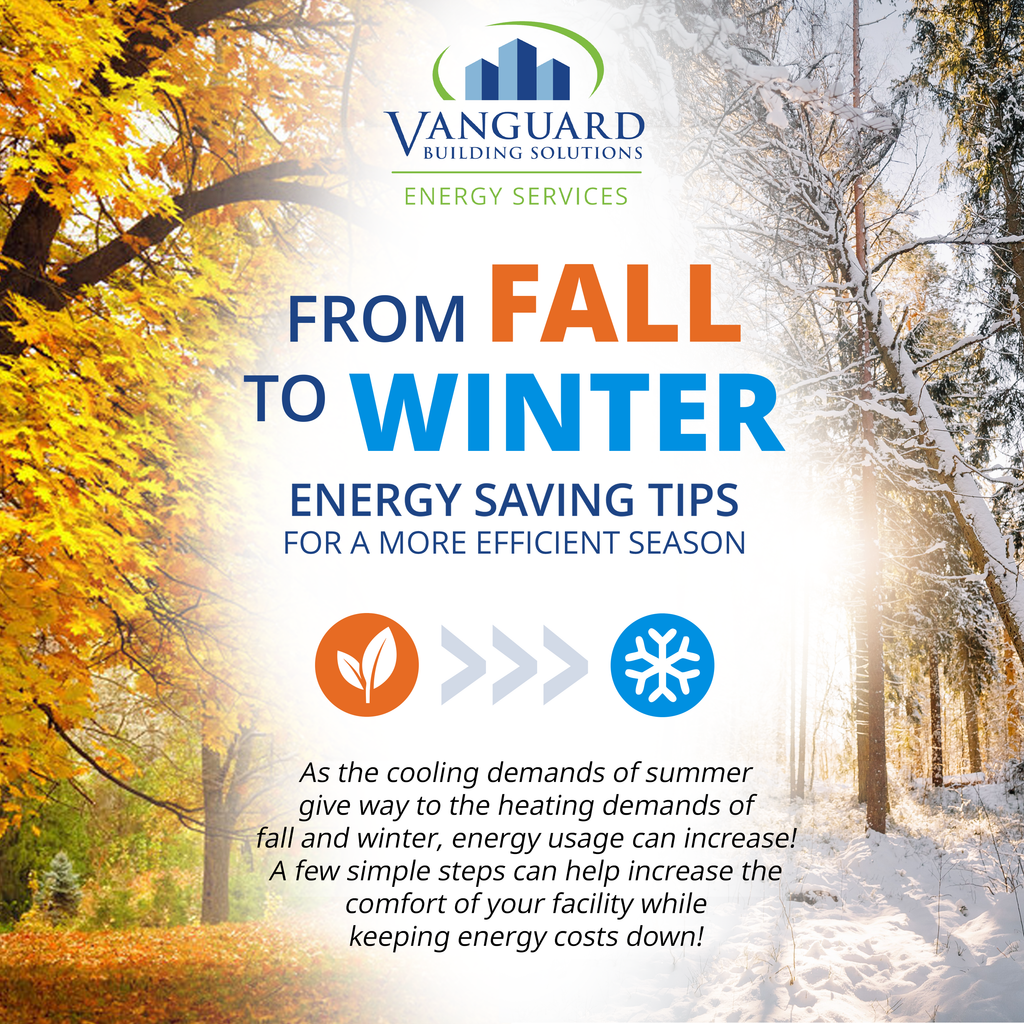
As temperatures begin to drop, buildings transition from summer cooling requirements to increased heating demands. This seasonal shift can significantly affect how facilities consume energy, particularly in commercial buildings with large HVAC systems and extended operating hours.
Additionally, shorter daylight hours increase reliance on artificial lighting. Combined with greater heating requirements, these changes can contribute to higher energy bills throughout the fall and winter months.
Understanding how seasonal changes affect your building’s energy consumption is the first step toward improving efficiency!
Building Owners and Facility Managers Can Prepare By:
- Reviewing historical energy consumption: Compare utility bills from previous seasons to identify trends and unusual increases in energy usage.
- Evaluating building operations: Identify areas where heating, lighting, or equipment may be operating unnecessarily.
- Planning preventative maintenance: Address potential equipment inefficiencies before peak winter heating demands arrive.
- Identifying energy-saving opportunities: Consider improvements that can reduce energy consumption without sacrificing occupant comfort.
By taking a proactive approach, facilities can better manage seasonal energy demands while maintaining reliable building operations.
Keep Your HVAC System Running Efficiently
Heating, ventilation, and air conditioning (HVAC) systems are among the largest energy consumers in commercial buildings. As outdoor temperatures decrease, heating equipment must work harder to maintain comfortable indoor conditions.
Without proper maintenance and controls, HVAC systems can consume unnecessary energy, increase operating costs, and experience reduced performance.
Fortunately, several improvements can help optimize heating efficiency throughout the winter.
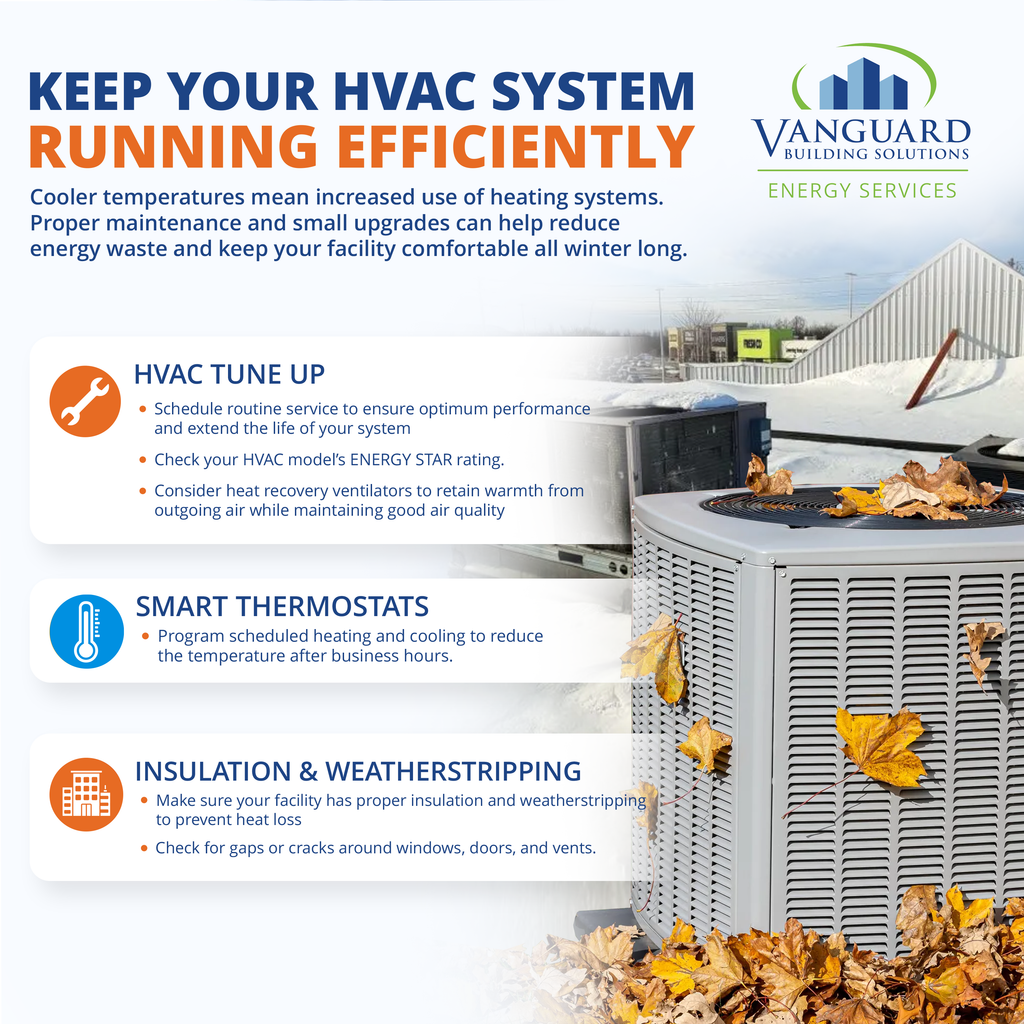
Schedule Routine HVAC Maintenance
Regular HVAC inspections and preventative maintenance help ensure that heating systems operate efficiently and reliably.
Facility managers should prioritize:
- Inspecting and replacing air filters when necessary.
- Checking heating equipment, controls, and system components.
- Inspecting ductwork for leaks or airflow restrictions.
- Evaluating system performance and identifying potential repairs.
- Reviewing equipment age, maintenance history, and efficiency ratings.
Routine maintenance can also extend equipment lifespan and reduce the likelihood of unexpected breakdowns during colder weather.
Install Programmable or Smart Thermostats
Programmable and smart thermostats allow building operators to adjust heating schedules based on occupancy and operating hours.
For example, facilities can reduce heating during unoccupied periods and restore comfortable temperatures before employees or visitors arrive.
When configured appropriately, these controls help eliminate unnecessary heating and improve overall energy management.
Consider Heat Recovery Ventilation
Heat recovery ventilation systems capture a portion of the thermal energy from outgoing indoor air and transfer it to incoming fresh air.
This process can reduce the energy required to condition outdoor ventilation air while maintaining indoor air quality.
For facilities with substantial ventilation requirements, heat recovery technology may offer additional energy-saving opportunities.
The takeaway: A well-maintained HVAC system, combined with effective temperature controls, can improve comfort, reduce energy waste, and support more efficient building operations.
Reduce Energy Waste Throughout Your Facility
While HVAC systems play a major role in winter energy consumption, other building components also influence overall efficiency.
Lighting, insulation, windows, and everyday equipment usage can all contribute to unnecessary energy costs.
Addressing these areas can help facilities reduce waste and maintain more consistent indoor conditions.
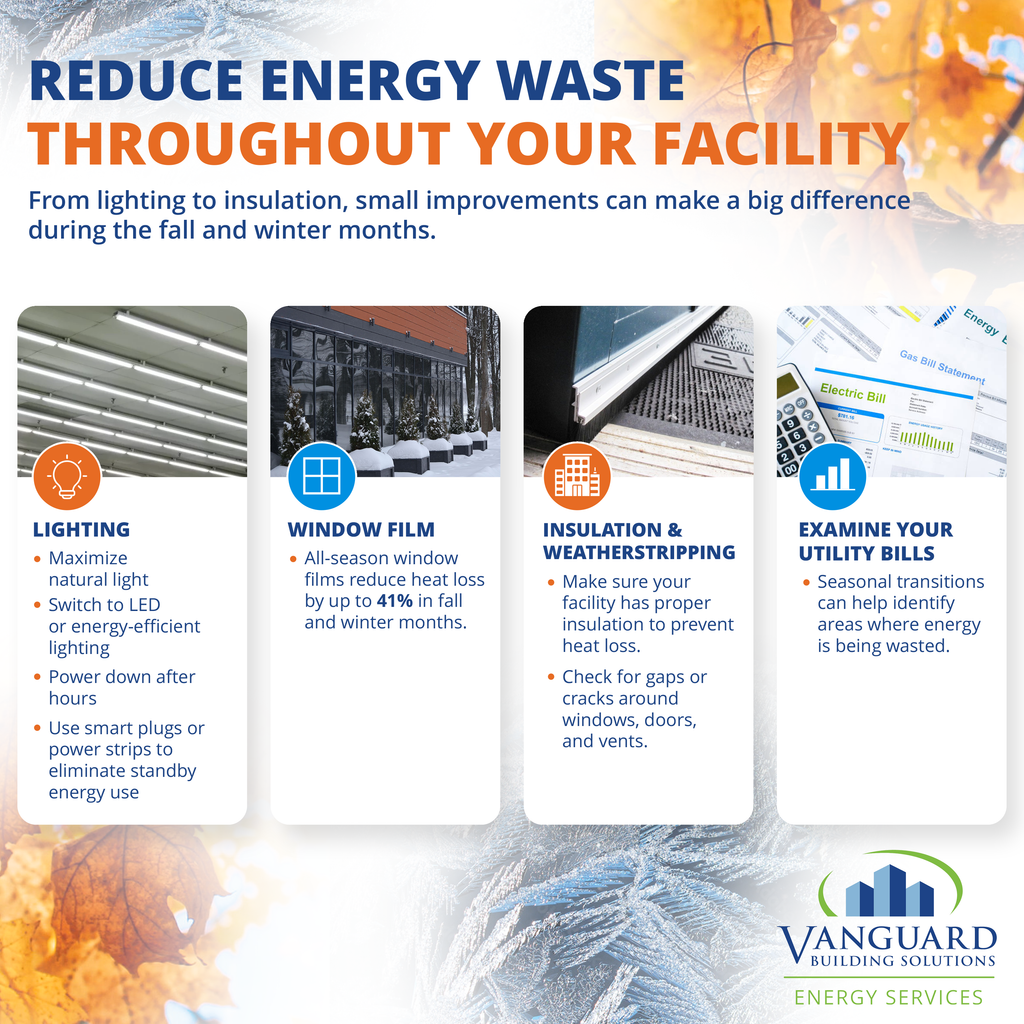
Upgrade to Energy-Efficient Lighting
Shorter fall and winter days mean commercial buildings often rely on artificial lighting for longer periods.
Upgrading outdated lighting systems to energy-efficient LEDs can significantly reduce electricity consumption while improving lighting quality.
Additional lighting strategies include:
- Maximizing natural daylight whenever possible.
- Installing occupancy sensors and automated lighting controls.
- Scheduling lighting shutdowns during unoccupied hours.
- Replacing outdated fixtures with energy-efficient alternatives.
Improve Insulation and Weatherstripping
Poor insulation and air leaks allow conditioned indoor air to escape, forcing heating systems to work harder.
Facility managers should inspect windows, doors, vents, and other potential leakage points for gaps or damaged seals.
Adding insulation, repairing weatherstripping, and sealing air leaks can help reduce heat loss and maintain more consistent indoor temperatures.
Consider Energy-Efficient Window Films
Windows can contribute to unwanted heat transfer during colder months, particularly in buildings with older or less efficient glazing.
Certain low-emissivity window films can help reduce heat loss through existing windows.
The potential savings depend on the type of film, existing window construction, climate, and building conditions. Evaluating these factors can help determine whether window film is a cost-effective improvement.
Review Utility Bills and Reduce Standby Power
Seasonal transitions provide an opportunity to examine energy consumption patterns and identify unexpected increases in utility costs.
Comparing monthly bills, tracking usage, and reviewing operating schedules can reveal areas where energy may be wasted.
Additionally, facilities can reduce unnecessary electricity consumption by:
- Powering down nonessential equipment after business hours.
- Using smart plugs or advanced power strips.
- Scheduling equipment shutdowns.
- Monitoring electricity consumption to identify unusual usage patterns.
The takeaway: Improving lighting, strengthening the building envelope, and managing equipment usage can collectively reduce energy waste throughout your facility.
Take Action Before Winter: Schedule an Energy Assessment
Preparing your facility for winter involves more than adjusting thermostats or inspecting heating equipment. A comprehensive approach to energy efficiency can help identify opportunities for long-term savings and improved building performance.
A professional energy assessment evaluates how a facility consumes energy and identifies areas where improvements may provide the greatest benefits.
Depending on the building and assessment scope, this process may include:
- HVAC system evaluations: Identifying outdated equipment, maintenance concerns, and opportunities to improve heating and cooling efficiency.
- Lighting assessments: Reviewing existing lighting systems and identifying potential LED upgrades or lighting control improvements.
- Building envelope inspections: Evaluating insulation, windows, and air leakage that may contribute to heat loss.
- Energy consumption analysis: Reviewing utility bills and operational patterns to identify inefficiencies.
- Energy-saving recommendations: Developing potential upgrades based on building needs, performance goals, and available utility incentives.
The Benefits of Improving Building Energy Efficiency
Investing in energy efficiency can provide several advantages for commercial facilities.
Lower Operating Costs: Reducing unnecessary energy consumption can help decrease monthly utility expenses.
Improved Occupant Comfort: Properly maintained HVAC systems and improved insulation can support more consistent indoor temperatures.
Greater Building Performance: Efficient equipment and building controls can help optimize facility operations.
Long-Term Sustainability: Reducing energy consumption can support broader environmental and sustainability objectives.
Prepare Your Facility for the Colder Months with Vanguard Building Solutions
As winter approaches, now is an excellent time to evaluate your facility’s energy performance and identify opportunities for improvement.
At Vanguard Building Solution, we help commercial building owners and facility managers identify energy-saving opportunities through comprehensive energy assessments, energy-efficient equipment upgrades, and utility incentive guidance.
Whether your facility needs HVAC improvements, lighting upgrades, or building performance optimization, our team can help identify practical solutions to reduce energy waste and improve operational efficiency.
Frequently Asked Questions
How can commercial buildings reduce energy costs during winter?
Commercial buildings can reduce winter energy costs by maintaining HVAC systems, installing programmable thermostats, improving insulation, sealing air leaks, upgrading to LED lighting, and reducing unnecessary equipment operation.
Why is HVAC maintenance important before winter?
Routine HVAC maintenance helps heating systems operate efficiently, reduces the risk of unexpected equipment failures, and can extend system lifespan. It also allows facility managers to identify performance issues before peak heating demand.
What is the benefit of a commercial building energy assessment?
A commercial energy assessment identifies areas of unnecessary energy consumption and recommends potential improvements. These may include HVAC upgrades, lighting retrofits, building envelope improvements, and energy management strategies that can reduce operating costs.